Chapter 10
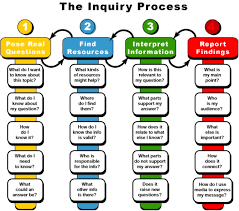
gets into detail about Inquiry Units, and I really like the concept of
them. As I was reading the chapter, I
was pondering different ways to implement Inquiry Units in my future ELA
classroom. Lets just say that a plethora
of ideas came to mind but nothing that is fully developed. In my opinion, the best thing about Inquiry
Units is that the students get to fully immerse themselves in a topic that
interests them. As future educators, we
have undergone enough educational psychology to know that one learns best by
being intrinsically motivated to do so, and inquiry units lends itself nicely
to this theory.
However, a
teacher’s worst enemy is always time because there is just so much to get
through and so many standards to meet that it makes incorporating inquiry units
rather daunting. In regards to the
common core standards, Daniels and Zemelman, at the very beginning of the
chapter, use an example of a teacher who does not begin a lesson plan by first
choosing a standard. Instead, this teacher
designs a lesson plan, teaches the concepts, and then decides which Common Core
State Standards were met (Daniels and Zemelman, 2014, p. 259). Daniels and Zemelman (2014) call this concept
“backmapping” (259). I found this
concept rather interesting because it kind of negates the premise of UbD where
a teacher starts off with a standards and then works backwards in the lesson
planning. UbD urges for teachers to know
where they are going, and I think that having this map is essential. I like the idea of Inquiry Units, but this
concept of “backmapping” seems to be a bit irresponsible. I do think that there
absolutely needs to be a destination in view, if not then the lesson plan will
result in chaos. There needs to be some
sort of idea of what the students should be learning. To invest a significant
amount of class time on inquiry units, you need to make sure that you are
meeting the standards you need to be meeting because the department of
education is to really going to care whether or not the students investigated
something that interested them; they will be looking for improved test scores
and all that other good stuff.
I really
enjoyed Chapter 11 because it was very insightful, and I think that every
teacher, no matter the content area, needs to bookmark this chapter. D&Z
state in this chapter that every teacher is a teacher of reading, and I must
admit that it takes some stress off of us ELA teachers. D&Z use the
example, “I’m a physics teacher, not a reading teacher” (278). Daniels and
Zemelman may sympathize with teachers who say things like this, but here is
what I have to say to this physics teacher—do you not assign textbook reading?
Yes? That is what I thought. How can you be a teacher in a content area that
assigns textbook reading, and not feel as if you are not a teacher of reading?
It is every teacher’s job to ensure that students comprehend any type of reading
that they come into contact within a course.
A teacher
can be so wrapped up in pushing the material that they may forget that not
everybody reads and comprehends at the same level.
D&Z states that we, as educators, must
build trust with students, especially those who feel like that they may not be
strong readers.
This, to me, seems like
common sense because not having a student’s trust is detrimental to their
learning and to your teaching. A line that stuck out to me while reading was, “…people
who have repeatedly failed at something usually cope by focusing their lives
elsewhere to avoid still more failure” (Daniels and Zemelman, 2014, 280).
This statement coincides with building trust
with our students.
I know that I don’t
want my future students to give up on reading, so my job is to teach them how
to improve, or find the enjoyment that can come from reading.
This chapter does an excellent job of
providing examples of strategies to implement, but for me, the most effective
strategy would be to model good reading habits. I think it is important to
provide the necessary tools before expecting students to master something. I
also think that is important to show them that sometimes I still have reread
something, or that I still stumble upon words that I do not know. It’s teaching
how to handle these bumps in the reading that matters the most.
 Chapter
12, for me, was a great conclusion to this book, as it reiterated the
importance of reading in every content area.
This chapter provides strategies from reading research that illustrate
how students read and how students are taught to read. In particular, I am most interested in the
section where Daniels and Zemelman talk about students should read as literate
adults. Literate adult readers choose a
variety of texts, both for informational purposes and for pleasure. This led to the concept of intrinsic
motivation, and how that is key to finding purpose in the reading. Daniels and Zemelman state, “intrinsic
motivations…lead to greater learning in high school subject areas” (p.296). However, it saddens me to say that, “the role
of intrinsic motivation in reading has been borne out” (Daniels and Zemelman
296). As students progress through their
education, they lose the motivation and self-interesting of reading, which is
detrimental in trying to build literate adult readers. However, I can sort of relate to this because
I feel like I was more in control of my reading diet in the earlier stages of
my schooling, and as I got to high school, I was one of those students that
Daniels and Zemelman described as reading to find answers to questions at the
end of the book. I think one of my main focuses as a future high school ELA
teacher is to make reading something students look forward to.
Chapter
12, for me, was a great conclusion to this book, as it reiterated the
importance of reading in every content area.
This chapter provides strategies from reading research that illustrate
how students read and how students are taught to read. In particular, I am most interested in the
section where Daniels and Zemelman talk about students should read as literate
adults. Literate adult readers choose a
variety of texts, both for informational purposes and for pleasure. This led to the concept of intrinsic
motivation, and how that is key to finding purpose in the reading. Daniels and Zemelman state, “intrinsic
motivations…lead to greater learning in high school subject areas” (p.296). However, it saddens me to say that, “the role
of intrinsic motivation in reading has been borne out” (Daniels and Zemelman
296). As students progress through their
education, they lose the motivation and self-interesting of reading, which is
detrimental in trying to build literate adult readers. However, I can sort of relate to this because
I feel like I was more in control of my reading diet in the earlier stages of
my schooling, and as I got to high school, I was one of those students that
Daniels and Zemelman described as reading to find answers to questions at the
end of the book. I think one of my main focuses as a future high school ELA
teacher is to make reading something students look forward to.  In this chapter, I also really
enjoyed the section that talked about allowing students to discuss what they
are reading. I believe this is often overlooked in a high school classroom, at
least in my experience, it was. This
makes me think back to everything we have learned about education, and a big
aspect of learning anything is socializing.
Thinking back to the very first assignment we did in SED 407, detailing
something we were literate in and how we learned, we came to the consensus that
we couldn’t have become literate in something without the guidance of someone
else. We actively have to discuss and work things out to understand them. I am all for cooperative group learning, such
as think pair shares or Socratic seminars.
As I conclude my final blog post on Subjects
Matter, I will say that there are some things that education is getting
right and then there are areas that need some tune ups, and as the next
generation of educators, we can all play an important role in enhancing the
state of education, and I look forward to this challenge. By the way, don’t
forget to incorporate reading in all of your classrooms.
In this chapter, I also really
enjoyed the section that talked about allowing students to discuss what they
are reading. I believe this is often overlooked in a high school classroom, at
least in my experience, it was. This
makes me think back to everything we have learned about education, and a big
aspect of learning anything is socializing.
Thinking back to the very first assignment we did in SED 407, detailing
something we were literate in and how we learned, we came to the consensus that
we couldn’t have become literate in something without the guidance of someone
else. We actively have to discuss and work things out to understand them. I am all for cooperative group learning, such
as think pair shares or Socratic seminars.
As I conclude my final blog post on Subjects
Matter, I will say that there are some things that education is getting
right and then there are areas that need some tune ups, and as the next
generation of educators, we can all play an important role in enhancing the
state of education, and I look forward to this challenge. By the way, don’t
forget to incorporate reading in all of your classrooms.